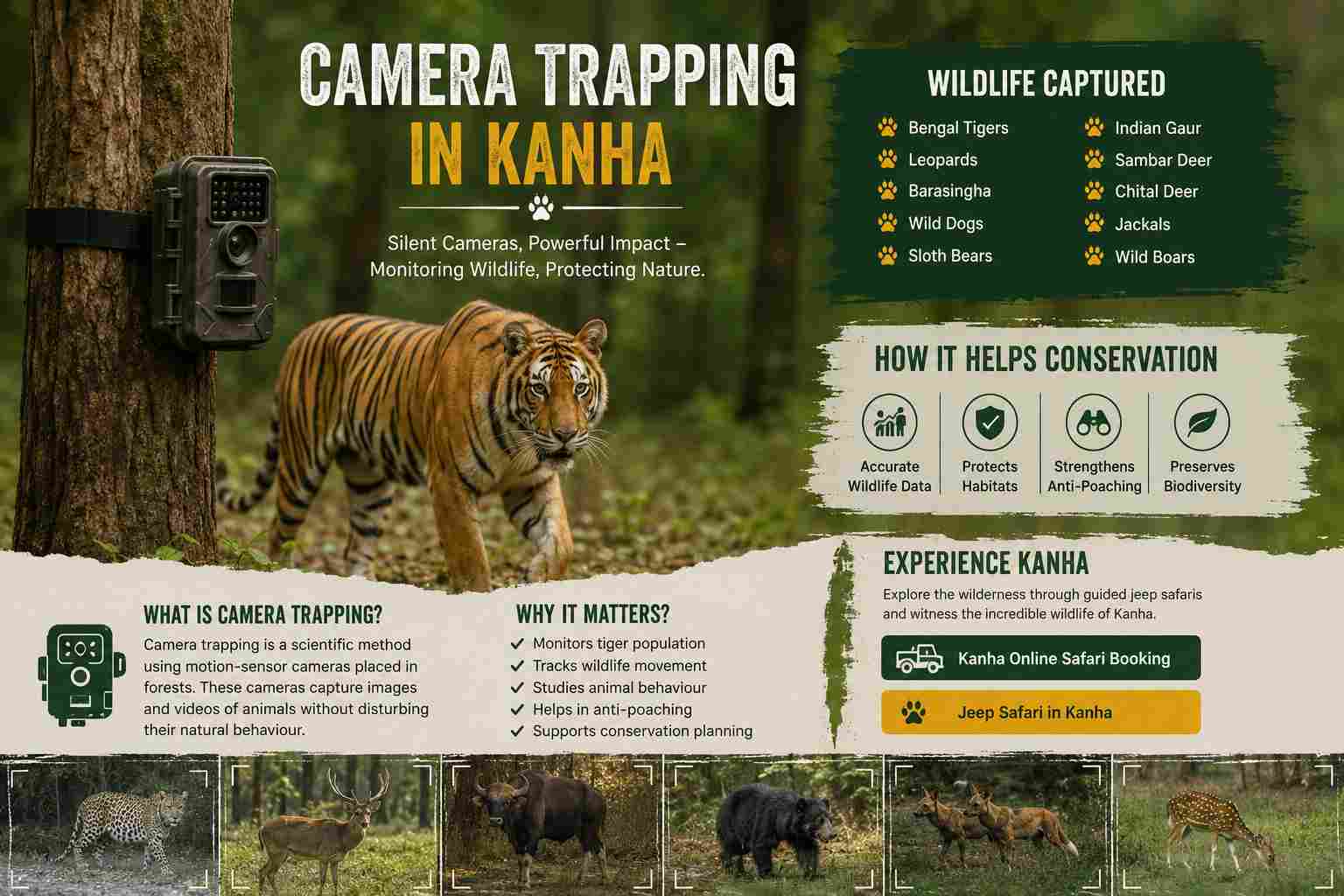
Camera Trapping in Kanha: The Technology Behind Tiger Conservation
Camera trapping has become one of the most effective wildlife monitoring techniques used in Kanha National Park. Hidden deep inside forests, these specially designed cameras silently capture photographs and videos of animals without disturbing their natural behavior. From majestic tigers and elusive leopards to barasingha and wild dogs, camera traps provide valuable insights into the rich biodiversity of Kanha.
If you are planning a wildlife adventure, you can explore safari options through Kanha National Park Safari Booking and experience the beauty of the jungle firsthand.
What is Camera Trapping?
Camera trapping is a scientific method that uses motion-sensor cameras installed at strategic locations throughout the forest. These cameras automatically capture photographs or videos whenever an animal passes in front of the sensor. Because they operate 24 hours a day, they can record wildlife activity during both daytime and nighttime.
Unlike traditional wildlife observation methods, camera trapping allows animals to move naturally without human disturbance. This makes it one of the most reliable and widely used tools for wildlife research, biodiversity monitoring, and conservation planning.
Why is Camera Trapping Important in Kanha?
Kanha is one of India's most famous tiger reserves and supports a rich variety of wildlife. Monitoring animals across such a vast forest landscape can be challenging, and camera traps provide an effective solution.
Forest officials and researchers use camera trapping to:
- Monitor tiger populations.
- Identify individual tigers through unique stripe patterns.
- Track wildlife movement and migration routes.
- Study animal behavior and activity patterns.
- Detect illegal activities such as poaching.
- Assess ecosystem health and biodiversity.
The information collected helps wildlife managers make informed decisions regarding habitat protection, conservation strategies, and forest management.
How Are Camera Traps Installed?
Wildlife experts carefully select locations based on signs such as pugmarks, scratch marks, animal droppings, scent markings, and frequently used wildlife trails. Cameras are generally mounted on trees at an appropriate height to capture clear images of passing animals.
In many tiger monitoring projects, two cameras are positioned opposite each other to capture both sides of a tiger. Since every tiger has a unique stripe pattern, these images help researchers accurately identify individual animals.
Tigers and Camera Trapping in Kanha
Tiger monitoring is one of the primary objectives of camera trapping in Kanha. Each tiger possesses a unique pattern of stripes, similar to a human fingerprint.
When a tiger walks past a camera trap, the photographs are recorded and later analyzed by wildlife experts. This allows researchers to:
- Estimate tiger density and population size.
- Track territorial movements.
- Identify breeding females.
- Monitor cub survival rates.
- Study interactions between different tigers.
These findings play an important role in long-term tiger conservation and wildlife management.
Wildlife Frequently Captured on Camera
Although tigers receive the most attention, camera traps record many other species that inhabit Kanha's forests.
- Leopards
- Barasingha (Hard Ground Swamp Deer)
- Indian Gaur
- Sloth Bears
- Wild Dogs (Dhole)
- Sambar Deer
- Chital Deer
- Jackals
- Jungle Cats
- Wild Boars
Many rare and nocturnal species are photographed only through camera traps, providing valuable scientific records and helping researchers better understand Kanha's ecosystem.
Benefits for Wildlife Conservation
Camera trapping has revolutionized wildlife conservation efforts throughout Kanha National Park. The technology supports conservation by:
- Conducting accurate wildlife censuses.
- Monitoring endangered species.
- Protecting sensitive habitats.
- Strengthening anti-poaching patrols.
- Understanding ecological changes over time.
The information gathered helps conservation teams respond quickly to emerging threats and ensures better protection for wildlife populations.
Future of Camera Trapping in Kanha
Modern camera traps are becoming increasingly sophisticated. Advanced systems can transmit images remotely, use artificial intelligence to identify species, and provide real-time alerts to forest officials.
As technology continues to evolve, camera trapping will play an even greater role in protecting wildlife and preserving the ecological balance of Kanha National Park.
Experience the Wild Side of Kanha
While camera traps reveal the hidden lives of animals, nothing compares to exploring Kanha's wilderness in person. Visitors can enjoy guided jeep safaris and experience one of India's finest wildlife destinations.
Book your safari through Kanha Online Safari Booking or learn more about safari experiences at Jeep Safari in Kanha .
| Camera Trapping Benefits | Purpose |
|---|---|
| Tiger Monitoring | Track tiger population and movement |
| Wildlife Research | Study animal behavior and habitat use |
| Anti-Poaching Surveillance | Detect illegal forest activities |
| Biodiversity Assessment | Monitor various wildlife species |
Conclusion
Camera trapping has transformed wildlife research and conservation in Kanha National Park. These silent monitoring systems work around the clock, helping scientists and forest officials understand animal populations, behavior patterns, and habitat requirements.
As conservation efforts continue to advance, camera trapping will remain an essential tool in protecting Kanha's extraordinary wildlife heritage for future generations.
For safari bookings, jungle tours, accommodation information, and travel assistance, visit Kanha Kisli National Park.